At the Cactus Tree Motel
June 1976, Joni Mitchell pulls off the highway and checks in to the sounds of Hejira

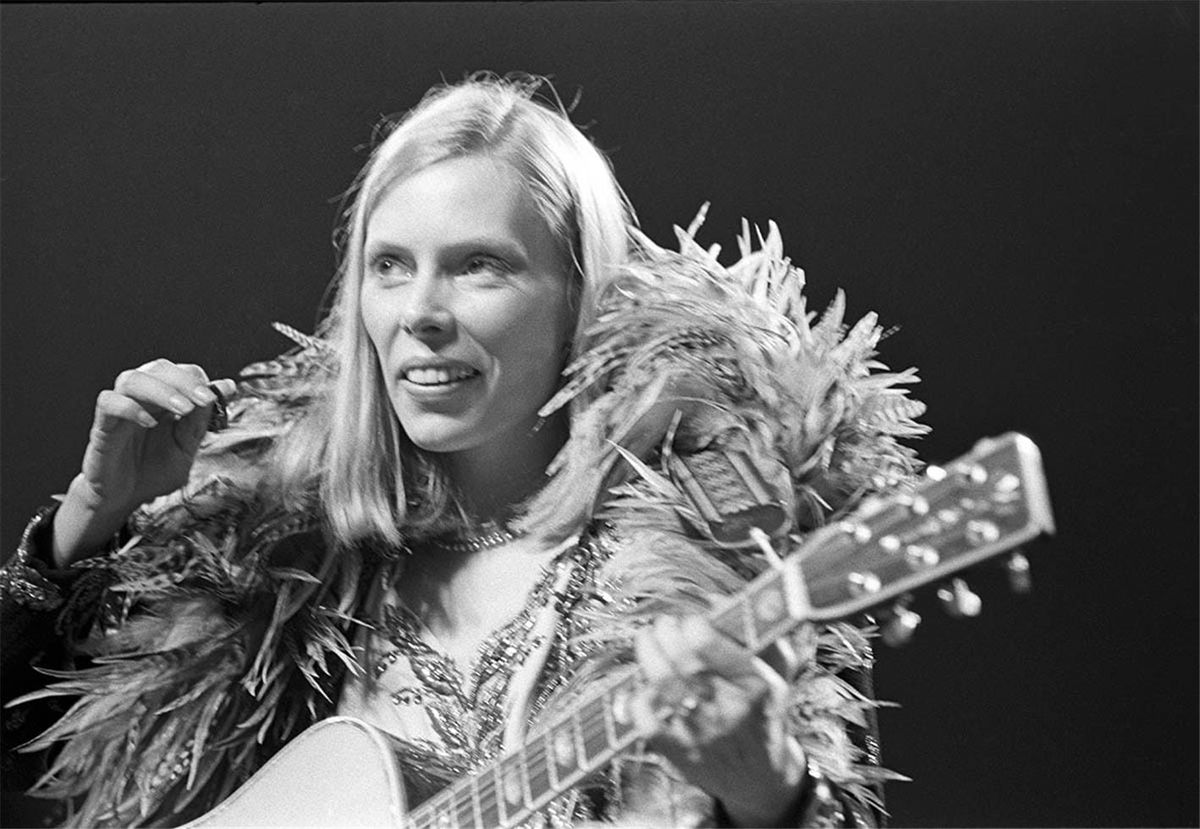
The sun is sinking behind the Tucson mountains and the western sky is pulling out all its old hits, but as she turns off the I-10, Joni Mitchell sees only the silver light of the Sonoran desert, burned into her retinas. Down the Miracle Mile, where the motor courts wait for traffic that bypassed this strip long ago, the neon signs crackle on one by one. A steer’s skull, a catfish, a cactus with half its tubes gone dark. She pulls into the Cactus and sinks back into her seat.
It’s June 1976, her last night on the road. She needs to wash all the dust and dirt and dreams from her head, recompose herself before the final drive home.
Only a few months ago she had graciously guided a photographer from Architectural Digest through the wrought-iron gates of her lavishly pimped Bel Air palazzo, past the fountain in the courtyard and the lily pond ringed with desert plants, into rooms where fishtail palms bent under the beams as if caught in a gale. She had bought the sound of Court and Spark and moved into it: Babylon in Spanish stucco, a red silk kimono thrown over the Steinway stool, the pool hissing under the sprinklers.
But tonight, after two months of bleached rooms, Chenille beds, Winn-Dixie cuts and pinball arcades, LA feels like a distant, Disney fairytale.
She’s been on some Princess/Pauper trip, careering away from her home comforts, cruising through the backroads of the south with no driving license to speak of, but a jangling box of police badges she has charmed from obliging highway cops. She’s pulled on big shades and cheap wigs, checked in under fake names and cast all luxury aside.
She’s an artist of course, so she don’t look back, but she can feel the new lightness, sense the discarded baggage strewn recklessly behind her, rolling back along the highway with the tumbleweed. Somewhere out there is a fiancé (drummer John Guerin, laid off at a North Dakota junction). There’s close to a million dollars and much of her commercial momentum flying away in the slipstream, after she walked off a Maryland stage and away from the world tour for the Hissing of Summer Lawns back in February. In the roadside diners, amid the butts of a couple of thousand of Marlboro reds, she has stubbed out a full octave of her singing range. And somewhere in the Rockies, out on the old Boulder turnpike, rattling by the road like an old soup can, she’s pretty sure you could even find her ego, zapped clean off by a boozy, giggling Buddhist teacher.
She had set out on the road, lovelorn and haunted, looking for refuge of the kind she briefly found stowing away on the Rolling Thunder Revue as it swung around New England through the fall of 1975. It had been like running away with the circus and she asked to be paid in cocaine, just like clowns used to get paid in booze. She wanted to get closer to Dylan, who had been dropping her name again, she was determined not to miss out on another Woodstock, and those weeks had electrified her. “Coyote”, the delirious travelogue she wrote at the front of the Rolling Thunder tour bus, in the fizz and crackle of her dalliance with Sam Shepard, had more fire in a couple of verses than Hissing of Summer Lawns managed in two sides and 45 minutes.
She had driven 3,000 miles in April, away from home, back out to Maine, ferrying a pair of lost souls, while hoping to respark that same Coyote spirit. But she found only snoring blue-haired boarders in waxed New England halls. So she set off on a solo return flight, straight down the east coast to Florida, back around the Gulf of Mexico, eventually catching back up with Rolling Thunder, playing to a couple hundred of boys in a reform school out in Gatesville, Texas.
Back on the Rolling Thunder bus she had felt like a prairie hawk, swooping down into the whisker wheat, in a predatory tango with her coyote. But singing to the boys of Gatesville State School, after two months on the road, she said she felt like a ragged old crow, black as the highway.
I've been travelling so long she sang
How am I ever going to know my home
When I see it again?
Her room tonight looks out on a courtyard, a garden of saguaro and cholla, and one vast, upside-down-looking thing the clerk calls a boojum. Many years ago, back in New York City 1967, fresh out of a screening of Don’t Look Back and her first electric encounter with the person of Bob Dylan, she’d been moved to write a song, all about a familiar woman who scorns her many suitors cos she’s so busy being free. She feels like a cactus tree, she had written, feeling pretty pleased with her image of proud, prickly independence, the kind that needs no man to cultivate it.
She’d barely seen a cactus back then of course. Just the prickly pears out on the Saskatoon coulees as a girl, and the dimestore windowsill pin cushions you could pick up in Greenwich Village. This afternoon she drove through a whole forest of them, saguaros stood on the hillsides with their arms raised to the sky. In surrender or to hitch a ride?
Is this where independence gets you? Alone, aged 32, peering at your haggard face in the bathroom of a motel room in Tucson? But she heard a strange new tune today, driving out alone through the desert, she wouldn’t trade for the world. It’s a song so wild and blue, it has thrilled her to her soul. It’s the fire she has driven the length and breadth of the bicentennial country searching for.
Joni feels full and hollow as she lies back on the chenille bedspread. She can still feel the westward roll of the road in her bones. She wants to be up before dawn, before the worst of the heat, so she can be home by evening, back with her reel to reel, to start recording through the night. By the time she gets to Phoenix it’ll be morning.