Shut up! You don't understand it!
Kevin Rowland's long atonement for the 2 Tone tour

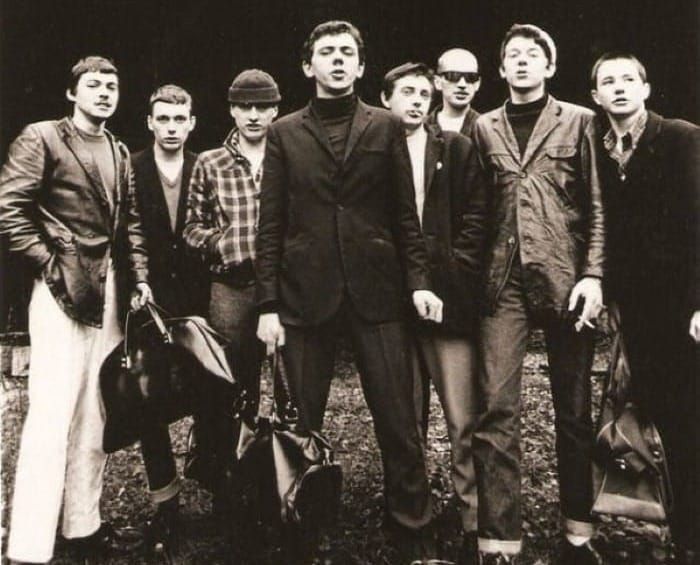
In many ways, it made perfect sense. With Madness newly signed to Stiff, and whisked away for shows in America, the vacant slot on the all-conquering 2 Tone revue of 1979 could be filled by an eight-piece Birmingham soul troupe performing incendiary sets across, well, Dudley - but clearly destined for greater things. If they didn’t sing from precisely the same rocksteady hymn sheet, the inclusion of Dexys Midnight Runners added weight to Jerry Dammers’ insistence that 2 Tone was never simply a ska revival, but rather a magnificently broad church, capacious enough to include punks, rude boys, skins, mods, northern soul kids still keeping the faith, the odd Sham 69 fan and even Stax soul zealots from Wolverhampton. As befits the son of the canon resident of Coventry Cathedral, Dammers was intent on keeping the movement ecumenical.
As such, Dexys were, despite the superficial sonic similarities, his ultimate nemesis. It’s commonplace now to think of punk as a kind of pop-cultural Reformation, a righteous revolt within a corrupt and decaying institution, that quickly splintered into competing, fissiparous dissident tribes, each believing they carried the one true flame.
There has never been a more puritanical hip priest than Kevin Rowland, a man so intent on pursuing his own inscrutable faith and singular soul vision that he insisted his musicians devote themselves to ascetic self-discipline, and was ready to dismiss them whenever they failed to commit to the cause with sufficient rigour. If Dammers was keen to invite ever more people into the punk reggae party, Rowland was determined to keep things pure and precious. A vivid review from 1980 describes Rowland prowling the edge of his stage, challenging the audience, looking them in the eye, “spotting something he didn't like and calling out to the offender, off- mike, "2-Tone ties (aggrieved shake of the head), we've seen all that."
As such the 2 Tone tour is a fascinating moment. It made Dexys: it brought them to an audience all too ready for their dour devotions, it spurred them to hone their set into a fearsome testament, and it brought them to the attention of an industry desperate not to miss out on the next big thing from the west Midlands. It also became, in Rowland’s mind something like an original sin, a founding compromise he ever after had to atone for.
Really, it’s amazing they ever agreed to take part. “We don’t want to become part of anyone else’s movement. We’d rather be in our own movement,” said Rowland at the time (echoing OG visionary weirdo William Blake “I must create a system or be enslaved by another man's.”) Later he would bitterly regret their involvement.
When Dexys had first supported the Specials, in Manchester in 1978, they were still dressed as weird glam throwback/proto-New Romantics missing links, in asymmetric haircuts, epaulettes and pantaloons. “We went down like a lead balloon”, said Rowland, “they just couldn’t fathom us at all.” The whole New York docker look that cemented them in popular consciousness, the neat ‘taches, the donkey jackets, the boots, the holdalls and carefully de-bobbled woolly hats, was in fact an elaborate contrivance designed for the 2 Tone revue to bring the mods on board, or, at the very least, not scare them away. “That was the big compromise for us,” said Rowland years later. “I often wonder if we’d held out what would have happened to us when the New Romantics came along.” You can’t help but wonder whether later fashion decisions, including the ladies lingerie of the solo album, mightn’t have been an odd way of atoning.
“Dance Stance”, produced by Bernie Rhodes for his own Oddball indie, was released in November 1979, the same month that the Specials, Madness and the Selector appeared together on Top of the Pops, and immediately marked out Dexys’ distinctive territory. In one of the rare reviews of the 2 Tone Revue to mention them, venerable rock critic Simon Frith rather dismissed them as “a friendly Midlands soul band - a nod to 2 Tone’s soul club past rather than vibrant present”. To be honest, as Rowland spits “Shut up! You don’t understand it!”, it’s hard to image a less friendly debut single. Even when the Specials’ cast a baleful eye over wasted innocence, the music was still spry, full of all the fun the teen mums and deadbeat rude boys were missing out on. Though Dexys bounced around gamely when they made their TOTP debut in January 1980, it was with the determination of boxers jumping rope. Even the brass section seemed to have a dourly determined Brummie accent of its own.
In some ways, “Geno”, released in March 1980 and the first Dexys number one, felt like the culmination of the 2 Tone spring, following the Specials’ “Too Much Too Young”, Madness’ “My Girl”, the Selecter’s 'Three Minute Hero” and the Beat’s “Tears of A Clown”. But though it started in urgent, upbeat anticipation, it settled into a marching, four-square stomp a long way from 2 Tone’s skanking joy or Northern Soul’s lightfooted rapture. The only dance you could imagine doing to it was that old 1970s Status Quo thumbs-in-beltloops swagger. This was the dockers look translated into sound - the sober boys gang, unit or firm, their discipline constantly carrying the threat of imminent violence, come together for one last heist on pop.
Searching for the Young Soul Rebels, the debut album released in July 1980, made the schism with 2 Tone plainer still. In one of the most audacious opening gambits in pop history, the album begins with the sound of a radio dialing through the megahertz. Through the static we hear the ghost of Johnny Rotten, lost on the airwaves, singing “Holidays in the Sun”, then Terry Hall, the lonesome wail of “You’re no friend of mine” from the Specials’ “Rat Race”. The set is abruptly switched off. “Jimmy? Al?” Kevin Rowland calls to his bandmates. “For God’s sake - burn it down.”
It’s a magnificently shameless piece of stage setting - very self-righteously claiming the post-punk throne and calling out to the true believers. But if Searching… was only one claim among many in the post-punk diaspora, it did at least deliver on Dexys much-vaunted soul vision. “Tell Me When My Light Turns Green” was the first song that Rowland wrote following the demise of his perfectly named punk band the Killjoys, that convinced him and Kevin Archer of the promise of his new direction. It’s a flat-footed approximation of northern soul, Rowland straining to hit the falsetto, but in its evocation of his wilderness years (“Rambling and gambling just hoping for more / I've been losing and boozing but I don't know what for”) it’s more powerful in its vulnerability and desperation than the straightforwardly sedulous cover of Chuck Wood’s northern floorfiller “Seven Days Is Too Long”.
More touching still was “I Couldn’t Help It If I Tried”, a heartbreaking, brassy ballad of betrayal, written with long-serving trombonist Jim Paterson, where Rowland first divines the Van Morrison soul glossolalia he would explore further on Too-Rye-Aye.
But the concluding “There, There My Dear” may be the perfect early Dexys song: an irresistibly two-fisted, horn-driven riposte to some 1980 NME darling (Howard Devoto?) who’s always quoting “Cabaret, Berlin, Burroughs, J.G. Ballard, Duchamp, Beauvoir, Kerouac, Kierkegaard, Michael Rennie”. “I don’t believe you like Frank Sinaaaaartraaaaah,” Rowland drawls, and for the first time he sounds like he’s having fun. On a roll, he matter-of-factly proclaims “The only way to change things / is to shoot men who arrange things,” possibly the boldest declaration of revolutionary violence ever to appear on a top ten single.
If on Searching… Rowland cast himself as a kind of post-punk Moses, calling out to his dispossessed people, constantly sighting some promised land just beyond the horizon, he was to become abundantly familiar with the wilderness. "Keep It Part Two (Inferiority Part One)" released in November 1980, sleeved in a terrifying but appropriate crop of Ilya Repin’s painting “Ivan the Terrible Killing His Son Ivan”, was a rewrite of the album track which originally had lyrics by sax player Geoff Blythe. Commercial success had apparently little to offer Rowland apart from stirring his paranoia to new heights. “Words refuse to come / Mental breakdown and the worst is yet to come,” he sang, sounding like the broadest nightclub Kevin Rowland impersonator imaginable. “My legs feel all numb / But my body is shaking / Sometimes I feel strong / But my soul is all breaking.” It is essentially, the sound of a nervous breakdown poured onto vinyl. Redemption of a kind comes in the first of the self-mythologising dialogues that would distinguish the Dexys masterpiece, 1985’s Don’t Stand Me Down. “Ah, hold back Kevin / You can wait for heaven,” pleads Al aka Kevin Archer. “There's more in you / This is only part two.”
Following the ignominious failure of the single, the entire band, apart from the ever loyal Paterson, grew exasperated with Rowland’s behaviour and quit to form the Bureau - an echo of the dissolution of The Specials six months earlier, when Terry Hall, Neville Staples and Lynval Golding left to form the Fun Boy Three.
Despite their differing sensibilities, it became clear that Jerry Dammers and Kevin Rowland were classic examples of a new type of postpunk impressario, the model of which was undoubtedly Malcolm Maclaren. They were less musicians than conceptualists, assembling producers and musicians as a film director might bring together writers, actors and technicians. The potential for stunningly choreographed pop art moments was immense, but the sense of exploitation, the absence of precisely the type of gang solidarity that was central to the image of both 2 Tone and Dexys, made them highly unstable.
Rowland was to reform the band almost immediately, designing the pugnacious boxerbeat of Dexys mark 2 which debuted with “Plan B” in March 1981. Despite this being arguably the strongest live incarnation of the band yet, ongoing disputes with EMI and then Mercury meant they never released the album they merited (though the Projected Passion Revue, originally released in 2007, and assembling singles b-sides and live performances made for a terrific document of the period).
Just as ska became almost a trace element as the Specials became increasingly Dammers’ studio project, one ingredient among many as he incorporated lounge, library and latin music, Dexy’s notion of soul became more purely conceptual - eventually on the chart-topping raggle-taggle gypsy sounds of Too-Rye-Ay (1982), and then the well-tailored Brooks Bros pop of Don’t Stand Me Down (1985), coming to stand almost purely for Rowland’s ongoing confessional journey.
Ultimately it’s this high-stakes sense of the urgency of pop, formed in the crucible of punk, and refined in the laboratories of the post-punk scenes and the music press, that lingers in the music of Kevin Rowland - whatever he’s calling his band of the moment. Even when recording the theme tune to Brush Strokes, or the latter-day Dexys “Irish and Country Soul”, it’s clear that pop - defined with the full post-punk attention that typified the 2 Tone moment to naturally encompass the type of shoes you wear, or the cut of your trousers, as much as the look of the video, the typography on the label or sound of the band - isn’t a matter of life or death. It’s much more important than that.