Cathedral swoopings
The honeyed, potent swoon of the Cocteau Twins
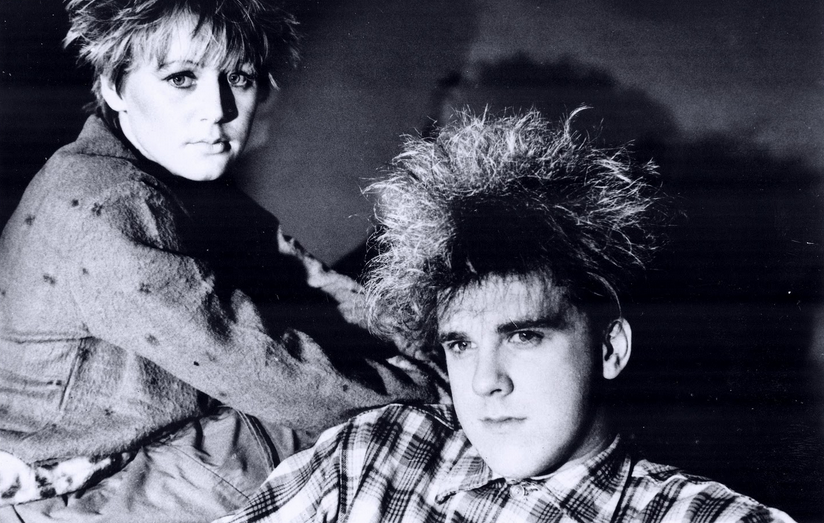
“The Sonic Cathedral must be built…” – so London’s long-running shoegazing nightclub puts it, with a nod to the utopianism of situationist urbanist Ivan Chtcheglov, the shameless boosterism of Factory Records’ Tony Wilson and the bathos of Phil Cornwell’s Pretentious Music Journalist. It’s not entirely clear where the phrase originated – the earliest recorded instance appears to be Barney Hoskyns’ dismissive review of U2’s October in 1981 – but there’s little doubt the band that inspired it were the Cocteau Twins.
Because while the Sonic Cathedral, like Leonard Cohen’s Tower of Song or Gaudi’s Sagrada Família may be the labour of many generations - nugazers like School of Seven Bells and M83 have busied themselves in recent years on the facades; Beach House have added a charming cloister; Ride, Slowdive and Lush contributed the odd nave, apse and transept, while Chapterhouse and the Telescopes modelled certain gargoyles and Kevin Shields of course painstakingly constructed all 18 spires… - the chief architects were Robin Guthrie and Elizabeth Fraser.
It’s hard to overstate their achievement: 8 albums, 11 EPS, and 8 singles between 1982 and 1996 that conceived, refined and perfected an entirely original flowering of British psychedelia. Of course they weren’t without precedent: the teenage Liz Frazer had the name of Siouxsie Sioux tattooed on her arm, and the sleeve of their debut, 1982’s Garlands, was drafted as part of Nigel Grierson’s college project designing alternative sleeves for the Banshees’ The Scream. You might even find the first airborne seedling of the whole Cocteau forest in the moment John McGeoch strapped on a 12 string in 1980 on ‘Christine’ (Barney Hoskyns, confirming his sonic cathedral credentials, wept in prose, describing it as “a waterfall of crystals”).
You could similarly track down sources in The Birthday Party, who the besotted young Guthrie and Fraser diligently followed around the country, and specifically Rowland Howard’s ectoplasmic, scarifying guitar on ‘The Friend Catcher’ (in the light of Howard’s similar influence on a young Kevin Shields, his tomb is a holy site in the crypt of the sonic cathedral). Or in the borealis chimes Martin Hannett summoned for Joy Division’s ‘Atmosphere’. Or going back further, in Phil Spector’s titanic teenage symphonies: John Peel, talking to his producer John Walters in 1985 remarked that “some of the early things sounded like they might have been produced by some kind of post-punk Phil Spector, you know. They were very kind of Wall of Sound-ish.” “Cathedral swoopings,” remarks Walters. “Cathedral Swoopers – what an excellent name for a band!” responds Peel, securing his own stain glassed window in the East Sacristy.
But in trying to find the source of the shoegaze delta, you might just start with Grangemouth, the small, beleagured industrial town on the banks of the Firth of Forth, where the oil refinery still belches smoke and sends Blade Runner plumes of flame high into the Falkirk night. The poet and filmmaker Humphrey Jennings wrote Pandaemonium, his book of montage history, about the twinned birth of Romanticism and the Industrial Revolution, inspired by the sulpherous, sublime beauty of paintings like P.J. de Loutherbourg’s ‘Coalbrookdale at Night’. In this longer context then, the Cocteau Twins aren’t simply godfmothers of shoegaze or psychedelic visionaries, but, like fellow traveler David Lynch, part of a longer tradition of immense beauty conceived in the shadow of infernal industrial light and magic.
It was Grangemouth Guthrie, Fraser and bass player Will Heggie were plotting to escape when they wheedled their way backstage of a Birthday Party gig and got an address for the fledgling 4AD and which they left behind with almost miraculous ease, thanks to the label boss Ivo, who evidently divined some promise in their early demoes – even if Liz herself wasn’t always audible.
Garlands their 1982 debut for the label can be considered a kind of warm up or throat clearing before their work began in earnest. Though Blackwing Studios, housed in a bombed out, deconsecrated church on the Isle of Dogs, is a strong contender for the site of the Sonic Cathedral (in the 80s it became the house studio for 4AD, and in the 90s hosted both Ride and My Bloody Valentine) in 1982 it was more used to recording Mute’s synth pop acts. As a consequence Garlands is both inchoate – wobbly, bilious gothic bass and chemical clouds of guitar – and too precise, with the drum machine still on the weedy presets of early Depeche Mode. What was remarkable, though, was the voice of Liz Fraser, suddenly revealed in the clarity of ‘Wax and Wane’ as urgent, occult, imploring and impenetrable - like some uncanny voicemail received in a nightmare.
An exhausting European tour with OMD, the crucial and continuing patronage of John Peel, the departure of bassist Will Heggie and the deepening of the bond between Guthrie and Fraser ensured that Head Over Heels (1983) was an emboldened second album. The cavernous drum beat that opens the record is a very blatant statement of intent. The pair had gone back to Scotland to write and record and Guthrie had taken full control of the studio, leaving the presets behind and setting the dials for the heart of some cosmic gas giant of a record.
The whole package was coming together: Nigel Grierson’s sleeve, the first authentically 23 Envelope artefact, feels like a satellite silverprint of this planet’s surface (in fact it was basin of water, sprinkled with seed pods and leafstems, with, supposedly, a mackerel exiting sleeve right). It uncannily mapped the band’s new soundworld: Guthrie’s guitars are now scintillating polychrome rays and hail, like John McGeoch’s psychedelic twangle set to cinemascope dimensions -and are backed with great gloaming piano chords and vaporous clouds of saxophone. There was much talk in 1983 of a nascent psychedelic revival but while the bands of LA’s Paisley Underground were mostly content to recreate past glories, here was a modern music, inescapably of its time and place, but setting sail for new horizons.
Most impressive was the full bloom of Liz Fraser. On ‘Sugar Hiccup’ she definitively eclipsed Siouxsie and emerged into her full range, enraptured and magnificent, blissed out on the oceanic tides of a sound that “makes the earth toss and tumble, heavens curtsey and bow”. On its release John Peel was moved to play the first side of the album in its entirety, playing the second side the following night.
Nothing - not for want of people trying - has ever sounded like Head Over Heels again. If this incarnation of the Cocteau Twins was influential it was the radiant example and commitment to radical beauty, an emergence from postpunk stricture into unabashed ecstasy – that emerges in very different form in the music of My Bloody Valentine on Loveless. But 1983 saw the coining of another Cocteau mode that charted the borders of a whole new genre.
With Ivo looking for a b-side for the first single from his curious new collective enterprise This Mortal Coil, he suggested Fraser and Guthrie record his favourite song of all time, Tim Buckley’s ‘Song to the Siren’. On Starsailor, his matchless 1970 album of pan-dimensional orphic deepsong, Buckley had recorded it as a weary song of romantic agony: Odysseus lashed to the mast, embracing easeful death. Fraser and Guthrie, unsure of chords and lyrics, refashioned it briskly, sparely and simply, as though from the perspective of the siren herself, a still, steady point of obsession, as worlds and oceans drift by. The deep roots of the song structure and the lingering, meandering melodic line, seemed to bring out a hitherto obscured Scottish folk timbre in Fraser’s voice, while Guthrie’s guitar trailed silvery star stuff, creating a recording that felt uncannily timeless, cosmically ancient and futuristic.
For all the majesty of Buckley’s take, it now feels like the definitive recording, striking a nerve and a chord in the culture with everyone from David Lynch – who wanted to use it in Blue Velvet, and who ended up working with Angelo Badalementi and Julie Cruise to recreate some of its darkling magic for himself – to John Grant, Bryan Ferry, Robert Plant, George Michael, Sinead O’Connor and eventually, full circle, Jeff Buckley himself…
It set the keynote of much of what we now know as shoegaze or dream pop: the decaying drone, the doomed romantic rapture, the billowing clouds of reverb cast a long shadow, that shows no sign of diminishing: no AR Kane, no Galaxie 500, no Slowdive, no Mazzy Star, no Beach House, no Alvvays, no Spotify “Spooky tunes for dreamy teens” playlist without this song.
But Guthrie and Fraser were by no means finished. Indeed you could make a strong case for Treasure, released in the autumn of 1984, as their imperial moment. That spring ‘Pearly Dewdrop Drops’ distilled all the euphoria of Head Over Heels into a genuine top 30 single, and set the stage for their most perfectly realised confection yet: an album that moved decisively beyond their influences into a singular Cocteauworld. For some it was all too much: a whole album of tracks titled ‘Amelia’, ‘Cicely’, ‘Aloysius’ and ‘Otterly’, like the register call at a Beatrix Potter preparatory school, encased in a sleeve seeming to depict some shadowy Miss Havisham, forever dressed in lace and dining on wedding cake. But If stylistically the group seemed to be verging on private self parody, musically, bolstered by the addition of Simon Raymonde they were inarguable: ‘Lorelei’ is one of the great pop hits that never was, surely a dance-remix away from being 4AD’s first top ten single, while the closing ‘Donimo’, was Guthrie and Fraser’s most loopily magnificent album closer yet, suggesting the showstopping credit sequence in some dream Peter Greenaway/Michael Powell collaboration.
The album was their most commercially successful yet, and practically established the group as a definitive mid-80s luxury lifestyle brand, like Factory or even Laura Ashley: one that might be extended, and even over-extended. When Robin Guthrie was asked to produce Felt’s Ignite the Seven Cannons, the result was their biggest hit (‘Primitive Painters’) but a record that felt overwhelmed by the incursion from planet Cocteau, with the band’s ramshackle jangle smothered by Guthrie’s production and Lawrence’s slender lead not just blown away but incinerated by the force of Liz Fraser’s backing vocals. What’s more the whole thing was wrapped in almost parodic 23 envelope sleeve.
‘Pandora’ from Treasure seemed to point in another direction: set adrift on gentle waves of bliss, it carried the group to lazycalm seas of Victorialand (1986), a necessary interlude, and as close as the Cocteau Twins got to making an acoustic record. Thanks to Alex, soon to be of AR Kane, but at this point working for Saatchi & Saatchi, ‘Song to the Siren’ had already been rerecorded to soundtrack a TV ad for Thomson Holidays, and Victorialand can feel like one long seductive beach soundtrack – albeit a beach off some liquid mercury ocean on a moon of Jupiter. Nevertheless, the album arguably invented Beach House, and the enduring SoCal appetite for easy dreampop drone.
1986’s collaboration with minimalist pianist Harold Budd, The Moon and the Melodies’, is an even more refined example of the band’s options for drifting into pure ambience, and a possible career soundtracking moody Scandinavian arthouse and nature documentaries. But as though stung by 4AD’s renewed vigour, with a second wave of American bands including Throwing Muses and Pixies, they returned with Blue Bell Knoll - arguably their most brilliantly realised album yet.
Enjoying early fruits of their success, the group were now esconced in their own September Sound studio on the west London banks of the Thames, and Guthrie was free to create the soundworlds he’d always envisaged. Blue Bell Knoll has sometimes been characterised as the Cocteau Twins’ cocaine album (it would be an interesting exercise to imagine the fabulous chemicals that correspond to the rest of the catalogue) – but you can only imagine it was a finer grade of drug than that inspired the post Britpop blowout. ‘Carolyn’s Fingers’, another entry on their phantom great hits album, is a delirious angeldust aria, Liz’s skyscraping never-more-rapturous vocals scoring luminous vapourtrails across Guthrie’s star spangled horizons (even describing their music at this point was one helluva drug).
But they had added new modes to their madness: Athol-Brose (named, impeccably for a sweetly potent whisky liqeuer) and a ‘Kissed Out Red Floatboat’ successfully incorporated vogueish bleeps into their honeyed swoon, while ‘For Phoebe Still A Baby’ and ‘Suckling the Mender’, realised in sound and title the mother-child lullaby bliss the music had always hinted at.
Guthrie and Fraser’s daughter was born not long after but prompted a new reckoning rather than domestic bliss. 1990’s Heaven or Las Vegas is the group’s masterpiece, partly because of the rich emotional ambivalence captured in the title. “Bills and aches and blues…” Fraser sings on the opening “Cherry-Coloured Funk”, like some Wim Wenders angel suddenly fallen back to earth and into recognisable language once more, and it’s like the most bittersweet hangover, gliding eerily over music so irresistible even Prince had to sample it.
Profound cracks were emerging in the band, but it resulted in their most emotionally engaging music of their careers. If Blue Bell Knoll and Treasure were madly magnificent, with awe frequently the only appropriate response, what was the strange cocktail of feelings conjured two minutes into ‘I Wear Your Ring’, where Liz’s happysad sirensong breaks off and some celestial French horn croons mournfully to itself? Or ‘Fotzepolitic’ (bluntly, literally, cunt-politics), where Liz coos ruefully, beautifully, “my dreams of love are sick… they’re a young girl’s dreams…”
The closing ‘Frou-frou Foxes in Midsummer Fires’ may be the silliest title in a catalogue winningly stuffed full of them, but it feels like the band’s elegy. Simon Raymonde composed the sombre piano chords in the days after his father’s death, and the verses feel funereal, strung with frail trails of feedback, but the song ignites as it builds to its chorus, Liz’s multitracked vocal lines, by turns mournful and imperious, entwined with Robin’s guitar orchestra chiming in vivid reverb. If it’s the band’s funeral, it’s some Viking one, the boat pushed out to sea, ablaze in glorious reds and oranges…
The group left 4AD, made a couple more excellent albums (some Friday nights after a rueful athol-brose or two you might be convinced that the frequently desolate Four-Calendar Café might even secretly be their finest record), but in many ways the real story really ends there. Many groups have followed the Cocteau Twins, and indeed Robin Guthrie continued to bring his shamelessly singular production sensibilities to bear on many of them (Lush and Chapterhouse to name but two). The continuing fecundity of dreampop, shoegaze and associated microgenres is one indication of the group’s ongoing influence. But the more time passes, the more remarkable and unrepeatable they seem.