Bon voyage
In a plane somewhere over Europe the Boys Next Door become the Birthday Party
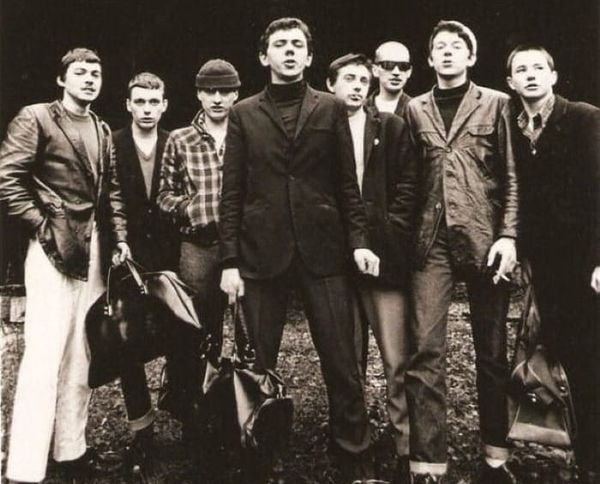
It’s 29 February, a searingly hot leap day in 1980, and the lines stretch long at Perth Airport. A hush has fallen across the hall, but it’s certainly not for the gang of sullen, skinny boys who have just flown in from Melbourne, stopping over before their long, long flight to London.
They are, supposedly, a pop group – a would-be rock and roll band – but with their lank hair, their coy name (“The Boys Next Door”), and the red carnations they’re all wearing, they seem more like some Oxbridge drinking club, heading back for the new term in the Old Country. By the looks of them, they’ve already started on the duty-free.
An actual, real-life Australian rock legend has passed through the airport that morning, and the boys are briefly chastened into sobriety. According to the check-in girl Mick Harvey has been chatting up, a coffin bearing the embalmed body of Bon Scott has just arrived, on its way to Fremantle Cemetery. Bon supposedly died in time-honoured rock and roll fashion – choking on his own vomit in the back of a Renault 5. But rumours are abroad that he was dabbling in heroin.
The Boys Next Door fancy themselves chemical connoisseurs, with at least three of them cultivating an intravenous habit over the past year. But the shock of the coffin, as they set out on their own voyage into notoriety, stops them in their tracks. It’s like the opening scene of a war movie: young recruits heading into battle as the first body bags arrive home. Will any of them make it back alive?
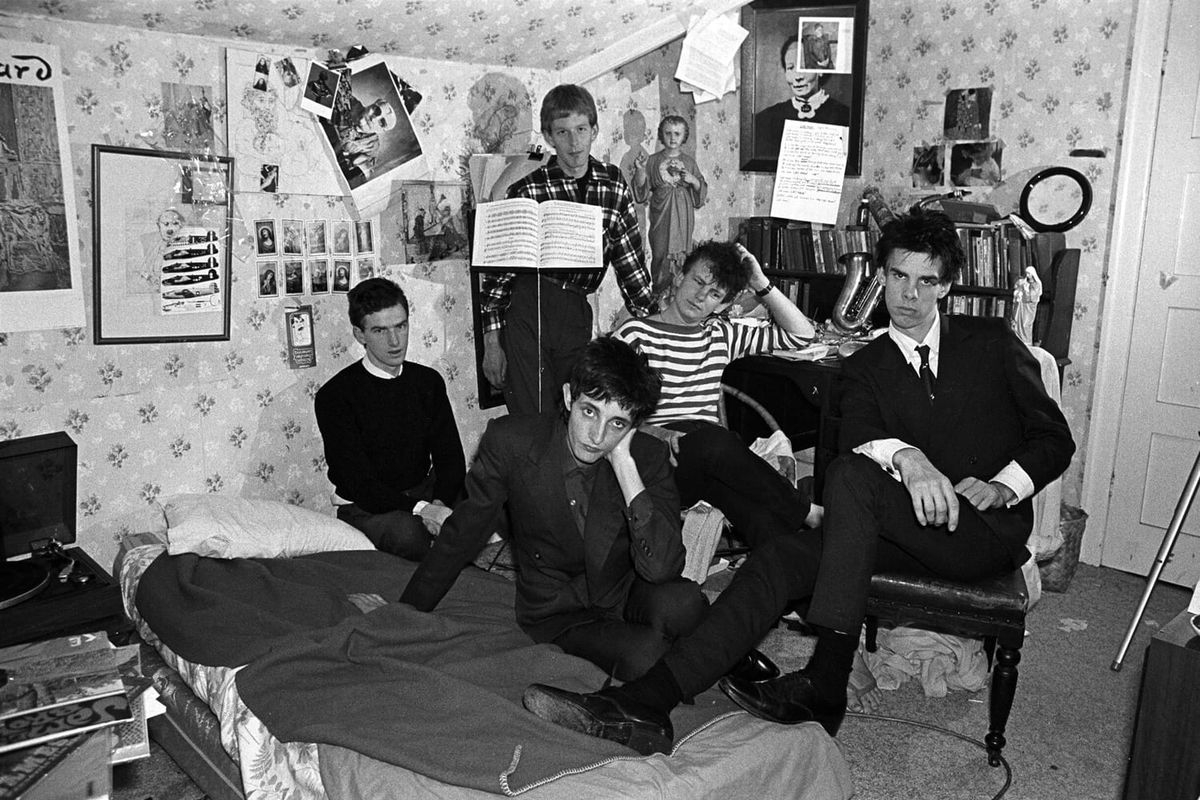
There are five of them, still schoolboyish, shuffling through customs, scratching strangely at their arms. Phill Calvert, the fresh-faced blonde drummer, already looks out of place – the butt of everyone’s jokes. The burly, boozy bass player, Tracy Pew, is swaying dangerously, looking to cause havoc. Mick Harvey has one eye on Tracy, one eye on the departure board, already settling into the steady, sober role of band manager. Guitarist Rowland Howard, blinking from beneath his fringe like an expressionist bushbaby, looks too frail to survive daylight, let alone an intercontinental flight.
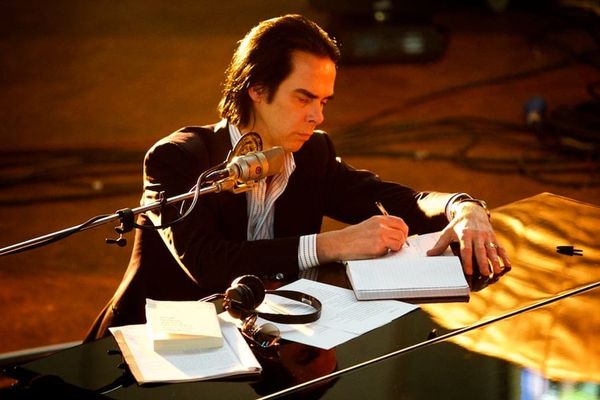
And swaggering along at the front – fag in one hand, notebook in the other – still enjoying the effect his coltish, lanky charisma has on the crowds milling by, is Nick Cave: a legend in his own mind, if not quite yet in Western Australia. He’s drinking it all in, as if for the last time: the smell of Winfield cigarettes and eucalyptus, the daggy twang of the accents, the taste of airport whisky mixed with the last of his sleeping pills. It feels like a mythic moment, the kind his dad loved telling him about: Ned Kelly plotting his raid on the Euroa bank, 1878; Vladimir Nabokov disembarking in Manhattan, 1940. What glamour and disgrace await him in the metropolis?
The 26-hour flight to London offers ample time to plot their next moves, reinvent themselves, dream more wildly. High above the Indian Ocean, stoned on altitude, ambition, and in-flight vodka, the journey takes on a hallucinatory quality. They cast bits of themselves overboard, like balloonists desperate to stay aloft, as the 747 races the sun into the northern hemisphere.
The name is the first thing to go – discarded like an embarrassing old school uniform. They’ve outgrown the punkish juvenilia of their masturbation anthems and Nancy Sinatra covers, outgrown even the ironic provincial sophistication they’d carefully learnt from NME and Rolling Stone, poring over the poses of Alex Harvey and Bryan Ferry, Tom Verlaine and Patti Smith.
They were, briefly, sensationally good at it. “Shivers”, the single they released from their debut album Door, Door in May 1979, was miraculously accomplished – like Bryan Ferry toying with suicide in Berlin, while backed by Tom Verlaine. Rowland Howard had written it as a precociously doomed 16-year-old, and made the mistake of offering it to Nick Cave when he joined the Boys in 1978. Cave quickly realised it knocked his own songs for six, and relished the opportunity to make it extravagantly his own, as documented in Paul Goldman’s lush, lurid video.
Competitive tensions between the combustible, performative Cave and the darkling, reclusive Howard were the engine of the band through 1978 and 1979, pushing them through noir glamour into something more depraved. And they continued to joust for the spotlight.
But at some point in 1979, as Nick struggled to deal with the sudden, shocking death of his father in a car accident, it felt like bass player Tracy Pew became the pounding heart of the band. Pew had suffered his own loss at an even earlier age, witnessing his brother die when he was just three. It seemed to set him on a reckless, impulsive course – oblivious to danger – through his teens and beyond.
It is Pew’s larrikin spirit – drongo philosopher, Belushi in a cowboy hat – that has led them to start aiming their show squarely at drinkers rather than thinkers. The music they’re most excited about right now, from the slapstick avant-garage of Pere Ubu to the furious, radiant apocalypse of The Pop Group, feels less like artfully confected songs, more like deranged, intoxicated happenings – a sensational theatre of the grotesque and absurd.
It’s all come together in the song they released a couple of weeks before their flight – their parting gift for Melbourne, their calling card for London – that seems to point the way ahead. “Happy Birthday” recounts a delirious, terrifying party where a young boy is gifted a samurai sword (“what a metal surprise!”), Captain Beefheart has been hired as the kids’ entertainer, and Nick is the anarchic ringmaster – the Cat in the Hat as drawn by Ralph Steadman.
It’s the sound, they eventually decide, as they begin their slow descent into England’s leaden pall, of what happens when The Boys Next Door become men – in a howling riot of fur and violence. They’re ready to throw the coming-of-age party. London, they feel sure, as they stumble down onto the Heathrow tarmac, won’t know what’s hit it.