Fall
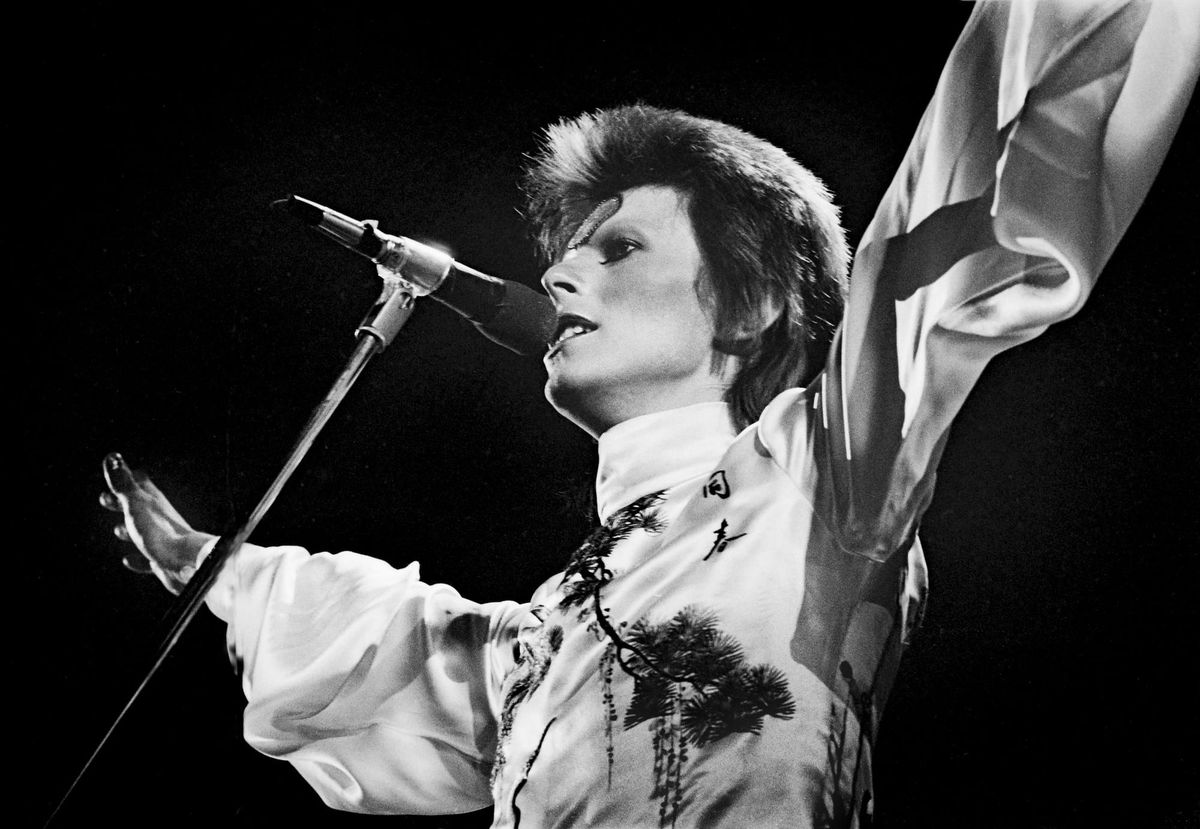
Who kills Ziggy Stardust?
In the spring of 1973 the smart money is on MainMan head honcho Tony Defries. The second leg of the US Tour has built to a rapturous climax at the Hollywood Palladium on 12 March, but with Aladdin Sane not to be released for another month, and US sales of Ziggy Stardust barely shifting 300,000, RCA are not happy. Having underwritten two sensationally spendthrift tours, they’re now demanding another album in 1973, plus a further US tour in the autumn, on top of the 40-date (plus matinees) tour of the UK already scheduled for May and June. And the expenses tap is being firmly turned off. Without the financial backing of ex-partner Laurence Myers, Defries is running out of options…
Or maybe it’s the Spiders from Mars? While their pitiful wages haven’t increased since Tolworth Toby Jug, the band has blithely lapped up the champagne expense account lifestyle, occasionally being reassured about the fabulous wealth they were accruing with every sold-out concert. It’s only after an idle conversation with Mike Garson on a flight to New York in February that Woody Woodmansey clocks that he’s being paid roughly one-tenth the pianist’s wage. It turns out that even the roadies are earning more than the Spiders.
Ronson leads a revolt, and threatens to sign the Spiders their own deal with Lou Reed’s management company, only to be placated with the promise of a back-dated pay rise, and - out of earshot of the others - his own solo career. But the discontent is simmering…
Or will the kids, as the song always prophesied, kill the man? Ziggymania is now reaching fever pitch. Aladdin Sane is released early ahead of Easter weekend, and goes straight into the UK charts as his first number one album, where it will stay for five weeks. Meanwhile Bowie and the band are sheltering in the dressing room of the Shibuya Kokaido theatre, Tokyo, having teetered offstage as fast as their high heels could carry them, as fans encouraged by Angie and Lee Black Childers rush the stage, clash with security and a riot ensues. With Japanese police insisting RCA hand over the guilty parties, and officials watching international airports, MainMan crew flee the country surreptitiously, via Honolulu. The summer is building to a frenzy and demand outstrips supply to the extent that in June RCA belatedly release “Life On Mars” from an album now 18 months old.
Or is David simply tiring of the treadmill and looking for a way out? Back in December 1972 he was already visibly uninterested in filming a new promo with Mick Rock for “Space Oddity” as RCA began exploiting the Mercury back catalogue. “I’m sick of being Gulliver,” he tells Melody Maker as he arrives back in Britain in May. “After America, Moscow, Siberia, Japan, I just want to bloody well go home to Beckenham, and watch the telly…”
But even the crushing routine can’t dull his restless curiosity: his head is being turned by new sensations, other music. Back in February he had attended a party in New York to mark the launch of Stevie Wonder’s Music Of My Mind, the album where Stevie first brought boogie to the Moog. Playing that night were the Main Ingredient, featuring teenage guitarist Carlos Alomar. But David struggles to interest Mick or the Spiders, who remain devoutly committed to the four-square Yardbirds R’n’B. He’s seen how Marc Bolan got trapped in a successful formula, he’s already frittered too much of his own time away to get stuck in another rut…
In end, maybe, it’s a suicide pact, or a conspiracy to murder. There are simply too many people with an interest in the demise of Ziggy Stardust. As the UK tour kicks off in May 1973, they all know that they are entering the fatal final act. Except, of course, for poor unsuspecting Weird and Gilly…
Though 18,000 tickets sell out in just three hours, the opening date is a remarkable fiasco. Earls Court has never hosted a rock concert before and the sound is a catastrophe, and fans are crushed as the crowd surges for a better view. It’s an inauspicious start, but the tour gets back on track in Glasgow, with Bowie relishing the chaos. “We had, I think, four couples making it in the back row, which was fabulous. There was a whole row of seats physically torn out of the floor, which sounds like the 50s to me.”
Through May and June the tour zigzags across the UK, through Norwich, Bournemouth, Liverpool, Newcastle, Sheffield and Leeds, leaving a trail of glitter, broken bones, trashed theatres (Bowie is banned from the Brighton Dome for life), and a legion of starry-eyed, soon-to-be punks, new romantics, pop stars, filmmakers and artists. By the end of June they have played to over 150,000 fans, through over 50 concerts in 37 towns and cities in 45 days.
3 July 1973, Hammersmith Odeon, and the Spiders face their final curtain. The set is now less a rock gig, more an elaborate piece of ritual theatre, the songs delivered like a familiar sacrament. But as they go through the motions of “Round and Round” with Jeff Beck, few in the audience are expecting the next line. David delivers it with impeccable timing, as though he had planned it all - the setlist, the costumes, the lighting, the hysteria - on a plane above California many years before. "Of all of the shows on this tour, this particular show will remain with us the longest,” he smiles. “Because not only is it the last show of the tour, but it’s the last show that we'll ever do. Thank you." And with a eerie smile on his pale face, Ziggy commits rock and roll suicide for the final time.