Afterlife

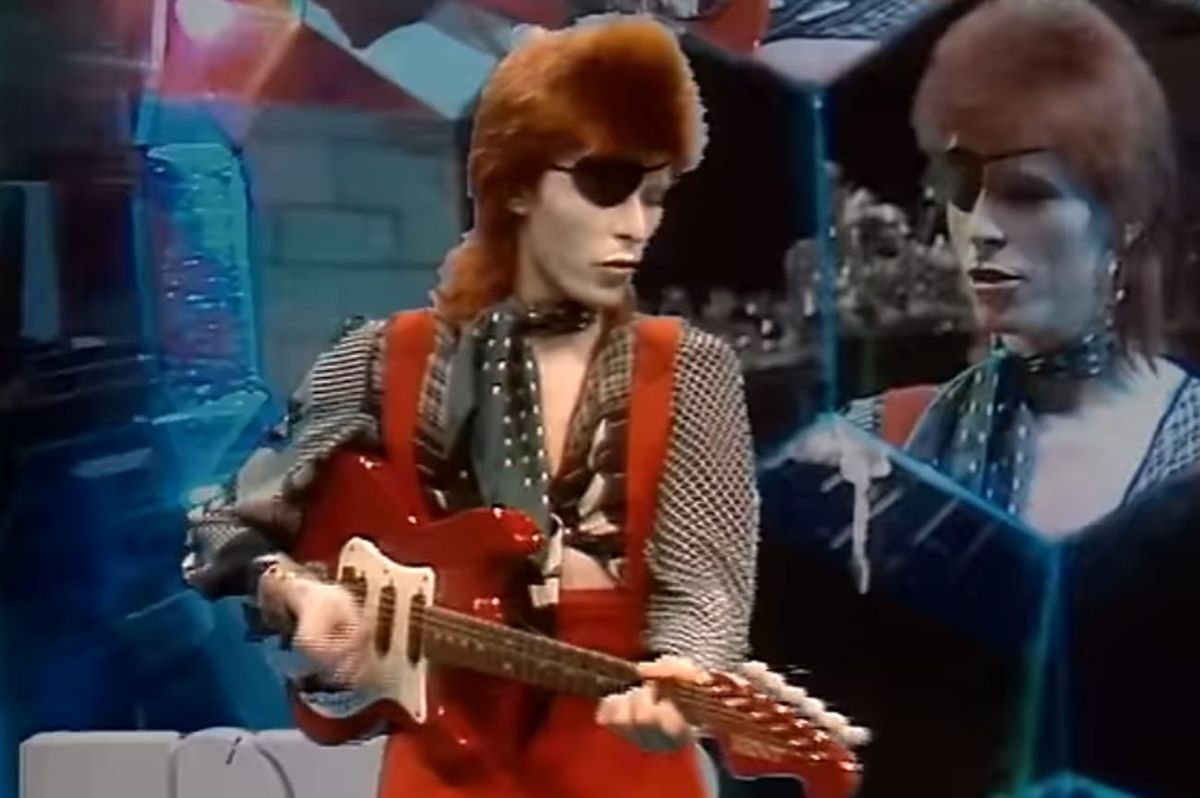
Way back in the spring of 1971, in his first fevered rush of Ziggysongs, David intended the project to be fronted by someone else. And maybe, if he had found someone more competent than Freddie Buretti, the whole course of British pop would have looked very different. Years later he returned to the idea: “I would love to have handed it on to somebody else. And I guess Ziggy would have been the perfect vehicle to have done it with. I don't know why I didn't find some other kid, after I'd done it for like six months, and said, here you are. Put the wig on and send him out and do the gigs, you know. And then I could have moved on quicker to something else...”
Instead, even after his very public Hammersmith retirement, David spends another year trying to slough the skin of Ziggy, frantically contriving new roles to audition for…
Despite the cancellation of the autumn’s US tour (“The massive arenas of 80 US and Canadian cities will not now, or perhaps ever again, hold within their walls the magic essence of a live Aladdin Sane…” MainMan tease in their corporate newsletter), he is still obliged to deliver another album for the second half of 1973. With Defries renegotiating his publishing deal, Bowie is advised to take the time-honoured contractual obligation of the covers album. Barely a week after bowing out at the Odeon, Bowie is back in the studio, in the Château d'Hérouville, recording Pin Ups.
Neither as richly conceived/artfully presented as Bryan Ferry’s These Foolish Things, nor as a bittersweet a mod memoir as the Who’s Quadrophenia - both recorded in the same nostalgic summer of 73 - Pin Ups feels like a betrayal of everything Ziggy had stood for. In the place of perverse, apocalyptic, futuristic pop, here’s some mildewed, wilted, second-hand memorabilia of the mid-60s Marquee. Not so much nuggets as gravel.
But there is something more promising in the sly, lascivious remake of “The Man Who Sold the World” he fashions for Lulu during the same sessions, which is like Sally Bowles inventing disco at the KitKat Club in Berlin, 1931. Pin Ups it seems is blatantly a stopgap, while Bowie plots his next moves
One of which, funnily enough, is a Broadway production of Ziggy Stardust. Introduced to William Burroughs for a Rolling Stone interview, David suggests that two of them could be the Rodgers and Hammerstein of the 1970s, and gamely attempts to pitch the the show stopping climax: “When the infinites arrive, they take bits of Ziggy to make them real because in their original state they are anti-matter and cannot exist in our world. And they tear him to pieces on stage during the song “Rock 'n' Roll Suicide”. As soon as Ziggy dies on stage the infinites take his elements and make themselves visible.”
“A black hole onstage would be an incredible expense,” suggest Burroughs. “And it would be a continuing performance, first eating up Shaftesbury Avenue…”
Not to be discouraged, Bowie has other schemes. A musical adaptation of 1984, for example. In September MainMan fly over Tony Ingrassia, director of Andy Warhol’s Pork, to co-write a loosely conceived stage production/movie/soundtrack album. Though Ingrassia is permanently zonked, and Orwell’s widow refuses to license an adaptation, David is consumed, sketching over a dozen songs for the project.
Decca’s re-release of “The Laughing Gnome” in September, rising to number 6 in the UK charts, strikes a timely note of bathos. After Ziggy, with a series of half-baked concepts in development hell, is David heading back to the theatrical purgatory of his late 60s?
The 1980 Floor Show, commissioned by NBC for their Midnight Special slot, and recorded at the Marquee in October, captures the malaise. Conceived as a promo for Pin Ups, and a preview of future directions, it features the leaden cover of “Can’t Explain” and the diaphonous take on “Sorrow”, both sung by contrasting incarnations of Ziggy, plus guest appearances by the Troggs and Marianne Faithful (doing her best Nico impression on a duet of “I Got You”). Most telling is the opening number, a debut performance of “1984”. The Astronettes are in place on backing vocal and bongos, Mick is doing a creditable Skip Pitts/Shaft impression on wah-wah guitar, but Ziggy, in full-length Kansai Yamamoto kimono, and Tharg the Mighty third eye, looks suddenly incongruous, like a provincial pantomime dame on Soul Train.
It’s one more sign of Bowie’s by-now infallible creative instinct that from this conceptual and stylistic farrago he nevertheless pulls off his fourth consecutive classic album (discounting Pin Ups), and delivers an immaculate curtain call for both Ziggy and glam.
It’s no overstatement to say that at this point David has his tanks squarely parked on the Rolling Stones’ impeccably mown mansion lawns. In October he and Angie move out of Haddon Hall to Chelsea. By December he is jamming with the Stones in Richmond, taking notes and providing handclaps on “It’s Only Rock’n’Roll”. By the end of the year the Bowies are spending Christmas Day with their new neighbours Mick and Bianca. And two days later David goes into Trident Studios to record “Rebel Rebel”.
It's a breathtakingly shameless appropriation. Mick Ronson is wrapped up in his own solo album now, so David has recruited Alan Parker on guitar, and he refines the initial sketch of a riff into the clanging, shimmering, sold gold foundation of what seems to be this late in the day, the ultimate Ziggy single: no high concept framework, no apocalyptic prophecy, just the eternal glam trinity of loud music, sexual ambiguity and great hair.
At a stroke, the riff seems to cement all the madly disparate disjecta of David’s brain - Burroughsian Wild Boys, his father’s Barnardo kids, artful Dickensian dodgers and fascistic Big Brothers - into the beautiful monster of Diamond Dogs. Not satisfied with having made the greatest Rolling Stones record of 1974, David tops off the achievement with another dementedly inspired piece of Ziggy iconography - gazumping Mick once more by hiring Guy Peellaert to wrap the record in a particularly lurid rock fantasia.
“Rebel Rebel” rises to number five in March 1974, but still the exploitation industry rumbles on. Barely a month later RCA release “Rock and Roll Suicide” as a standalone single, credited, simply to BOWIE. For the first time in three years, it fails to make the top twenty. David is on his way elsewhere, on another fantastic voyage, to find the soul of Nixon’s America. Ziggy Stardust has finally left the building.