Good times for a change
It is your sacred mission to restore the sanctity of the Pop Moment
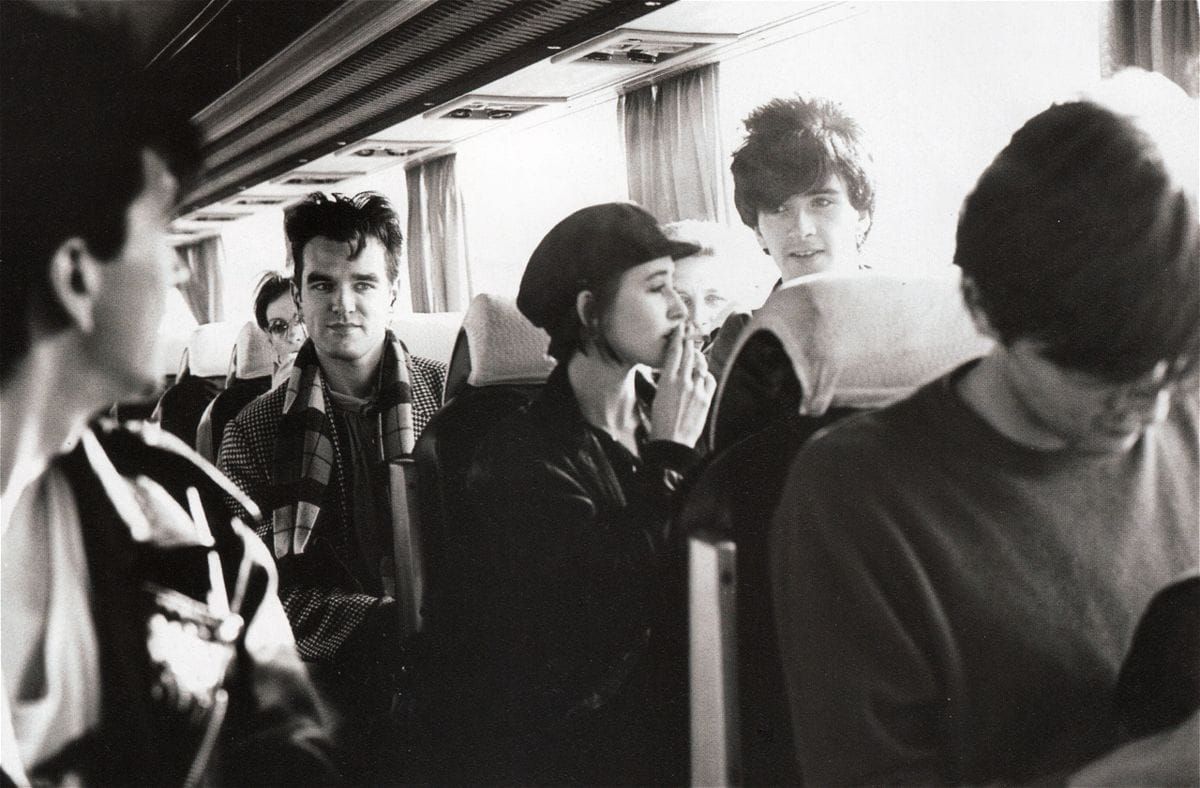
Even the drizzle of Euston Station on a November Thursday evening cannot dim the radiance. You know this station well. You have scavenged its concourse countless times in the milky London dawn, awaiting the first train back to Manchester Piccadilly, returning from scuffling pilgrimages to catch sight of David Bowie, the Ramones, Patti Smith, your dazzled brain readjusting to the pigeonshit and smoke, the deflating despatch back to the black and white North, the dismal resumption of business as usual.
Tonight, there is no business as usual. You have in fact refused the offer of a helicopter to make the return trip home. Shirley from Rough Trade, more accustomed to booking the Raincoats into provincial polytechnics, has spent the week checking flights, hiring pilots, figuring the logistics of how the Smiths can record their debut Top of the Pops performance in White City on Thursday afternoon and get back to Manchester in time for their performance at the Hacienda the same evening. It never occurred to her that you would say no.
Jim Kerr wouldn’t have thought twice. Simple Minds had been wreathed in dry ice at the BBC studios, the sleeves on their Armani jackets rolled up, singing about the Clydeside docks as though they glittered in the dark near the Tannhäuser Gate. Squashed into a British Rail seat, you are still wearing your Evans outsize big girl’s blouse and beads, sleeves resolutely buttoned, enjoying the scandal and confoundment you have stirred among your fellow passengers.
You are used to making the journey alone, gazing glumly through the window at a reflection that obscures the dozing dormitories of southern England. Now, remarkably, you have an entourage. It all feels absurdly like the opening of A Hard Day’s Night, minus Wilfred Bramble. Scott Piering and Joe Moss are standing in the aisle, nattering about PAs and stage times. Andy and Mike have gone in search of the smoking compartment. Johnny is still a ball of energy, cradling the sunburst Rickenbacker 12 string he’s borrowed from Ray Manzanera, via John Porter, and which, legend has it, once belonged to Roger McGuinn.
You are, as ever, plotting your next move. You have foreseen this all, charted every twist and turn, slavishly drafted your blueprint in your Kings Road eyrie, with the intensity and obsession others men reserve for their model railways, never quite believing that it might ever really come true. But this is no time to relax or relish your hour of triumph. There is too much that could go wrong, too many careless passengers and conspirators along for the ride. You must watch everyone like a hawk.
You have seen this happen in other people’s lives. Across the enchanted summer of 1972 you donned your satin bomber jacket and toddled out to witness Marc Bolan, David Bowie and Bryan Ferry materialise from some glam rock Narnia onto the streets of Gorton and Stretford. Now you have somehow fluked the combination, fooled the border guards, bolted through a closing door and found yourself smack bang in the heart of the dream.
Your skinny arms are sore from pinching yourself. Just over a year ago you emerged blinking into the spotlight of the Ritz on Whitworth Street, second on the bill to some slippered Soho popinjays, to sing urgently of Manchester’s damned and doomed. You sounded like you had just risen from some shallow grave - awoken by the kiss of a passing minstrel - and wandered down from the moors and onto the stage. Now, following whirlwind months of rehearsal, performance and recording, signing with Rough Trade, recording for John Peel, teasing a growing audience to rapture, you have arrived.
Top of the Pops has been a magnificent anticlimax. In your heart the BBC Television Centre on Wood Lane is something like the Vatican City of light entertainment, with the chance of encountering Shirley Bassey, Les Dawson or a cyberman around every corner. In practice the keys have been carelessly handed to dim functionaries and disinterested make-up girls, and the Top of the Pops studio is the court of the aptly named Michael Hurll, the set a middle aged accountant’s damp dream of a Benidorm nightclub.
It is your sacred mission to restore the sanctity of the Pop Moment. As you flail gallantly before the cameras on your tiny stage, it is as though you have finally awoken from a very long very bad dream. You twirl your gladioli above your head, like the blades of the copter you curtly dismissed, in a bid to clear the air of the dry ice, the balloons and the stench of Simon Bates. The flowers might have once been a pointed antidote to Hacienda brutalism, or a token of solidarity to the women of Greenham Common, but tonight you are courting a generation. You are also, naturally, thumbing your nose, an old hand at staying elusively above it all.
Now as your train races towards Piccadilly, you must think very carefully. Before boarding the train at Euston, Johnny had found a payphone to speak to his girlfriend Angie, who reported blown minds and bedlam at the Hacienda. You are returning as prodigal sons, conquering heroes, ready to be carried aloft by a crowd of thousands. The moment is too precious to let slip, you have waited far too long to be a flash in the pan.
Everything depends on how near you keep Johnny Marr, this impossible force of nature who has rescued you from purgatory. He has just turned 20, all his dreams are coming true, and every day his pretty young head is being turned by a new guitar, a mindbending sound, a fresh acquaintance. You have already marked the card of John Porter, the producer who has rescued your debut album but inveigled his way a little too closely into Johnny’s affections. Now, as the train squeals into the station, you keep a hawkish eye on Joe Moss as he puts a fatherly hand on Johnny’s shoulder. Johnny has, it’s true, put in the hard yards, pulled the band together, booked the gigs, taken the tapes to London. But it’s Joe who has offered his Portland Street office as rehearsal space, bought the PA, quietly guided them to this astonishing brink. Success has many fathers, you have been told, while failure is an orphan. But there is no room in the Smiths for anyone else. You won’t share him. Because this is not like any other love.