Farewell little fireball
If you measure an artist by the strength and depth of the response they provoke, then Ronnie Spector is one of the greatest pop artists of the last 60 years.

RONNIE SPECTOR
1943-2022
For all the grandiose backing tracks assembled in the Gold Star Studios between 1962 and 1966, there was nothing to match the overwhelming into-the-red chorus of love and reverence that met the passing of Ronnie Spector on 12 January 2022. Who else could unite the full spectrum of the pop pantheon, from the heavenly Brian Wilson to the infernal Keith Richards, from Ariana to Zendaya, not to mention Patti Smith, Bruce Springsteen, Billy Joel, Elton John, Joan Jett and Morrissey?
What were we mourning? On the face of it, it seems a slender achievement: a handful of singles across 1963-66, only one of which went top 10. A solitary album, which barely scraped into the top 100. A version of “Frosty the Snowman” on a brazenly shameless Christmas compilation. And a series of doggedly hopeful comebacks from the 70s onwards that never really found an audience.
And yet - let’s put it plainly - if you measure an artist by the strength and depth of the response they provoke, then Ronnie Spector is one of the greatest pop artists of the last 60 years. In fact it’s a tribute to the era that Ronnie co-founded and defined that it meant a mixed race teenage girl from Washington Heights could make a reasonable claim to immortality armed with not much more than industrial quantities of Cleopatra eyeliner and Aquanet SuperHold, a scrappy, wavering, heartfelt voice born out of a schoolgirl infatuation with Frankie Lymon, a frankly sensational smoulder and shimmy, and a certain indomitable East Harlem defiance.
Pop songs are spells. Most work their magic for a season, born aloft by passing currents of adolescent spirit and commercial whim, and, if they’re lucky, they retain some faded charm for those they once seduced. 70 years on, so many of the greatest hits of early rock and roll now sound antique, like something from the days of horse-drawn carriages, gramophones and daguerreotypes.
But mysteriously, through some uncanny force in their framing and performance, a few slip free of their time. As Ezra Pound almost put it: “A great pop song is news that stays news”. And no pop song has stayed new over six decades as successfully as “Be My Baby”, first released roaring into the summer of 1963, and roaming ever since, like some inexhaustible tropical cyclone - Hurricane Ronnie - across the airwaves, screens and senses of the world.
It seems like every generation encounters it anew. From Brian Wilson first hearing it on the radio and almost careering off the freeway straight into the Pacific: “It wasn't like having your mind blown,” he sighed in wonder, “it was like having your mind revamped”. To Martin Scorsese, ten years later, channelling its power, supercharging the super-8 opening scenes of Mean Streets.
From the Ramones and Johnny Thunders, Patti Smith and Bruce Springsteen divining the primitive punk rapture in its Harlem heart to the Jesus and Mary Chain, pounding out Hal Blaine’s deathless drum intro, as though hammering on a Ouija Board, trying to summon some honeydripping vengeful spirit against the 1980s. From Madonna’s mission statement “I want to look the way Ronnie Spector sounded: sexy, hungry, totally trashy” to Amy Winehouse’s towering beehive, growing ever more imperious as her torchsong flared and her spirit floundered.
“They were dirty great explosions, guerrilla grenades,” wrote Nik Cohn in 1969 about “Be My Baby” and its successors. ”They were the loudest pop records ever made.” In his book, Awopbopaloobop Alopbamboom, he was already mourning the era of “Superpop”, “the noise machine, and the image, hype and beautiful flash of rock’n’roll music”. It was, he said, “Elvis riding on his golden Cadillac… James Brown throwing off his robes… Mick Jagger, hanging off his mike like Tarzan….”
And yet, 60 years it’s clear that “Be My Baby” was part of the Big Bang - coeval with the Kennedy assassination and Beatlemania - of a new universe. Despite Cohn’s elegies, the fallout from that very dirty bomb rose up into the atmosphere, drifted to every corner of the globe and into the very air we breathe. Superpop - that magical capitalist confection of music, rapture, sex, marketing and fashion - has extended far beyond the end of the 60s and the noise machine has globalised, extended its supply chains east, to Singapore, China, South Korea…
You will search in vain for a single mention of Ronnie in Cohn’s history, though you will of course find plenty about Phil Spector, the pale Faustian hero of the whole shebang. Even after the autobiographies, the court cases, the revisionist histories and hashtags, the jail sentence and the sordid death, a crude auteurism still hangs over the music made by Phil Spector and his associates in the 1960s.
And yet we know that pop records, like cathedrals, films, football teams and restaurants, are chaotic collective enterprises. How many geniuses were involved in the creation of “Be My Baby”? The writers, Ellie Greenwich and Jeff Barry, part of that golden Brill Building generation transforming hormonal boomer yearning into poetry. Jack Nitzsche, carefully codifying and arranging Phil’s visionary derangements. Hal Blaine casually coining the thunderclap heartbeat of pop melodrama. The whole Wrecking Crew, painstakingly reining in their collective craft, instinct and expertise through countless stupefying takes in the Gold Star studio to meet Phil’s exacting, monomaniacal demands.
In the studio hierarchy of the time, the singer was very much at the bottom - summoned only once the heavy lifting had been done. And Phil was famously casual about “the talent” - drafting in Darlene Wright to record “He’s A Rebel” while the Crystals were on the road, then adding insult to injury by crediting her version of “He’s The Boy I Love” to the same group. Yet even he was supposedly moved to exclaim “That’s the voice I’ve been looking for!” once the Ronettes - still Peppermint Lounge wannabes - hustled their way to an audition, and Ronnie crooned hopefully through “Teenager in Love” (the source is Ronnie’s autobiography. Larry Levine, Spector’s engineer, remembers him being more circumspect: “They’re good looking but they don’t sing too well”).
Ronnie wasn’t as powerful or controlled a singer as Darlene Wright, nor as thrillingly full-throated as The Crystals’ LaLa Brooks - and certainly wasn’t a force of nature on the level of Tina Turner. It was almost though Phil had dreamt her up himself, out of some yearning for the New York of his childhood, writing “Spanish Harlem” with Jerry Leiber for Ben E King back in 1960, about a rose that flourishes in the Upper Manhattan moonlight, “growing in the street / Right up through the concrete / But soft, sweet and dreamy…”
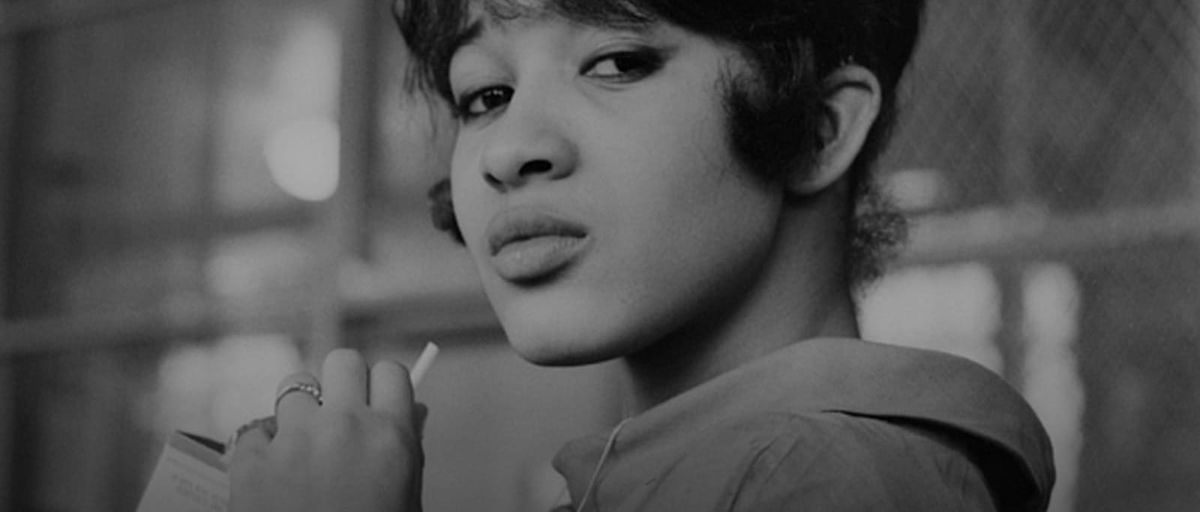
The Ronettes were proudly sassy, sexy and urban, in figure-hugging minidresses rather than the homely high school prom crinolines of the Shirelles. Like Louise Brooks or Stuart Sutcliffe, Ronnie Spector had the uncanny gift of posing for photos that seem decades ahead of their time. Age 18, on her lunch break as a senior at George Washington High School in 1961, she’s holding a juicebox yet peers down into Winston Vargas’ camera with the regal poise of an East Harlem Nefertiti. Pictured backstage at the San Francisco Apollo in December 1963, the girls horsing around with Dionne Warwick, Muhammad Ali and Little Stevie Wonder, she alone gazes deep into the lens, as though challenging a viewer in some distant future to even think about outcooling her.
But Ronnie’s faltering voice - the bravado of her whoah-oh-ohs undercut by her tremulous pitch - belied the sass. She threw herself into the teenage fantasias Phil contrived for her because she whole-heartedly believed in and embraced them. Even after the hell of their life together, she still looked back on those early days with fond affection: “When I was with Phil Spector in the recording studio, I knew I was working with the very best,” she said in her autobiography. “Meeting him was like a fairytale. I loved him madly, and gave my heart and soul to him.” Jim Miller, writing in the 1979 desert-island-disc anthology Stranded, caught it best: “She brought to Spector’s fantasy-land the element of authenticity and the possibility of disenchantment. With a stroke of her wavering voice, she let us all in on the hopeless fragility of her fondest wishes [...] Ronnie believed in what she sang and tried desperately to make it seem real.”
It’s tempting nowadays to frame the records that they made together as a battle, a life-and-death struggle: Ronnie singing for her life to escape the walled tower of song Phil is intent on imprisoning her within. So much of the enduring fascination with Ronnie from everyone from Southside Johnny and Bruce Springsteen on “You Mean So Much to Me” in 1976 and the E-Street Band and Billy Joel gifting her “Say Goodbye To Hollywood” in 1977, to Joey Ramone producing She Talks to Rainbows in 1999, seems seems to come from a dude-ish fantasy of rescue or putting things right, like Agent Cooper borne ceaselessly back into the past on a quest to finally save Laura Palmer.
The years of appalling physical and psychological abuse that Ronnie endured and somehow survived after their marriage in 1968 can’t be overstated. But it’s not simply down to Stockholm Syndrome that Ronnie sometimes thought of herself as “the final brick” in that Wall of Sound; she saw herself - and was - as a crucial part of that Gold Star team building something madly magnificent (though at other times she would more grandly describe herself as “giving birth” to the Ronettes singles in the studio, as though all the crackling dynamic potential of the records was still latent until she brought them to fruition).
However you try and resolve the algebra of artistic and romantic collaboration, codependency and abuse, what’s undeniable is that there is a mighty, moving majesty to the records that Ronnie made with Phil, together with Nitzsche, Levine, the collective scenius of the Brill Building and the Wrecking Crew - from “Be My Baby” through “Baby I Love You”, “Do I Love You?” and “Walking In The Rain” - that you find nowhere else in the glittering, diabolical Xanadu of the Spector catalogue, and vanishingly rarely in the subsequent six decades of pop music. For the perfect storm of talents assembled, Ronnie Spector was the lightning that was bottled on those records, and her spirit still crackles and flares, can still electrify your very being and break your weary heart. As Patti Smith put it in her own brief elegy: farewell little fireball.