Beatles 3: Brian
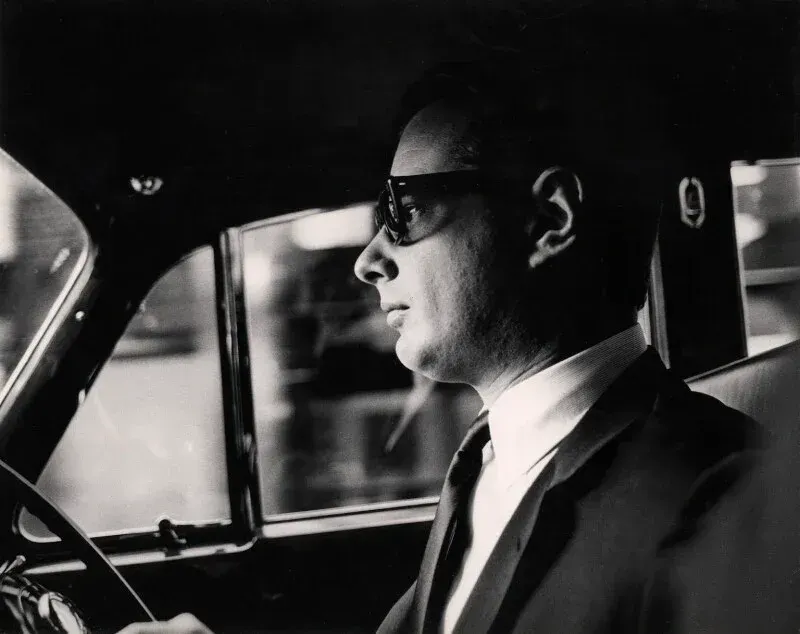
Brian Epstein is weeping.
No one can see because of the Raybans he’s kept firmly in place all day, but gazing down at the crowds from the balcony of Liverpool Town Hall this sunny Friday afternoon, 10 July 1964, he just can’t keep it together.
In truth he’s been in tears all year. November 1963 when the boys appear at the Palladium for the Royal Variety Performance (at least partly tears of sheer gratitude that John doesn’t swear when he tells the nobs to “rattle yer jewelry”). Four months later, when the telegram arrives in Paris, confirming that “I Want to Hold Your Hand” has gone to number 1 in America.
And most any night as the Beatles crisscross the UK through the bitter winter of 1962-63, standing at the back of the ABCs and Adelphis, behind the screaming girls, where he thinks no one can see him, he’s in floods. If Beatlemania, as the Daily Mirror now calls the hysteria sweeping the western world, has a patient zero, it’s Brian.
Today he should be feeling like a conquering hero. All the way from Speke Airport, through their childhood streets, as they’ve made their way to the premiere of A Hard Day’s Night, Liverpool is teeming. A few months earlier Bill Shankly, fresh from leading Liverpool FC to their first league title in almost 20 years, had been welcomed like a revolutionary leader. But for Brian this is his imperial moment - it’s not for nothing that press officer Derek Taylor has started referring to him as “the Nemperor”. It’s only July and NEMS artists - not just the Beatles, but also Cilla and Billy J Kramer (not to mention Peter and Gordon) - have already had six UK number one singles. In the US the Beatles are already well on their way to their fifth.
Just a couple of years ago, smarting from rejection, Brian had told the sniggering suits at Decca that his boys would one day be bigger than Elvis Presley. Sure enough by the end of 1964 the Beatles have nine songs in the top 100 Billboard songs of the year. The one-time King doesn’t muster even one. It’s just all happened a little ahead of schedule.
The boys had been in no hurry to go the US. They’d seen the way that British acts from Cliff to Adam Faith had headed out with great hope only to wind up fourth on the bill to Fabian. In fact, Paul had proudly stated that they’d only go over the Atlantic if they already had a number one single. Nevertheless, the morning after the Royal Variety Performance, with their conquest of the UK assured, Brian is on the early flight to New York, ready to play hardball with Ed Sullivan.
Sullivan had been one of the many passengers (including the British prime minister Sir Alec Douglas Home, and Carole Crawford, the newly-elected Miss World) inconvenienced when fans brought Heathrow to a standstill on the Beatles’ return from their short tour of Sweden at the end of October 1963. Feeling a little tingle of the hysteria around Elvis, he suggested they come over for one of his Sunday night variety shows.
Mindful of winding up one more British novelty, sandwiched between a juggler and a ventriloquist, Brian insists his boys get top billing. Taken aback, in turn, by the chutzpah of the guy, the bookers agree, but say they can pay no more than £3,000 per show (by comparison Elvis had got $50,000 back in 1956).
It might be the greatest deal of the twentieth century. On 9 February 1964 more than 70 million Americans, desperate for some cheer after the long mournful winter, tune in and flip their collective wigs. In 1963 EMI had to beg Capitol to release Beatles’ singles; now the pressing plants are working overtime to keep up with demand. And that’s not even half of it.
The entertainment-industrial complex of the 1960s is clicking into gear, and within days the discerning Beatlemaniac can choose from a range of Beatles badges, t-shirts, dolls, wigs, combs, masks, jackets, pens, boots, bow ties, bubble bath, mothballs, talcum powder, ice cream, bubblegum and cola. You can even, if you choose, buy cans of 100% authentic Beatles breath.
Struggling to keep on top of his burgeoning empire, Brian outsources the merchandising operation to his solicitor, David Jacobs, who in turn gives the job to Chelsea bon viveur Nicky Byrne. Realising that no one involved in the Beatles’ business dealings seems fully aware of what they are dealing with, Byrne suggest that his Seltaeb company give NEMS 10 per cent of the profits. It might be the worst deal of the twentieth century.
That’s certainly one reason for Brian’s tears. Maybe another is the Hitler salute that John can’t help pulling on the balcony. But there’s more… Gazing out over Liverpool, over a crowd having maybe the greatest Friday night in the city’s history, from the docks where he was regularly beaten half to death, to the Mathew Street cellar where he first met his boys one lunchtime in 1961, out to the NEMS record store and beyond to the Childwall home where his parents regularly despaired of him, there’s a fleeting sense that he has no more worlds to conquer.
They had a dream, not so long ago, that they’d all live in a village together: John, Paul, George and Ringo in houses around a central green, where Brian would live, and, ever watchful, keep a careful eye on them. But, now in the summer of 1964, flush with cash at last, they’re already buying up their mock-Tudor mansions in Surrey, while Brian is spending more and more nights alone in Knightsbridge. Are his boys flying the nest already?