An embarrassment of riches
The matchless tragi-comedy of early Madness
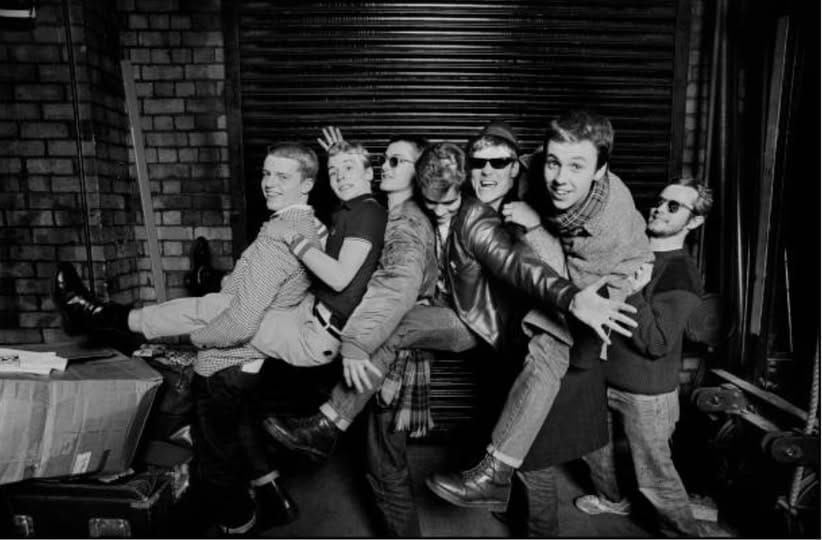
You can make a good case for 8 November 1979 being the greatest ever episode of Top of the Pops, but thanks to the presenter it’s one that will never be repeated again. The Selector, looking impossibly sharp, bounce around the studio with the irresistible “On My Radio”. The Specials and Rico threaten to spill off the stage altogether performing a louche “Message to You, Rudy”. And Madness, looking more than ever like schoolkids in fezes who have somehow gatecrashed the party, conga through the bemused audience with “One Step Beyond”. Also appearing were Dr Hook, Lena Martell and Sham 69, instantly consigned to pop oblivion.
It felt like the official start of the 1980s, and was an astonishing show of power by a fledgling label barely six months old. Though Madness had released just “The Prince” on 2-Tone before signing a long-term deal with Stiff, as the camera pans to Woody on drums, looming behind him is the already iconic - for once the word is justified - black and white Walt Jabsco logo. Though bands like Madness and the Beat would come and go, 2-Tone as a broad movement, a kind of anti-racist popular front seemed to have delivered almost immediately on Dammer’s dreams of a united, integrated, stylish, danceable, politically conscious youth movement.
But for such a self-professed good-time party band - whose own t-shirts proudly proclaimed FUCK ART LET’S DANCE - Madness were always the most problematic of the 2-Tone groups. Just a week before the triumphant Top of the Pops performance, 11 people had been hospitalised after a razor fight at the 2-Tone revue gig at Hatfield Poly. A couple of weeks later the NME published a combative feature titled NICE BAND, SHAME ABOUT THE FANS, highlighting the apparent friendship between Chas and Suggs and some of the skinheads in their audience wearing National Front armbands, and detailing how racist fans forced support act Red Beans and Rice to abandon their set at the Electric Ballroom.
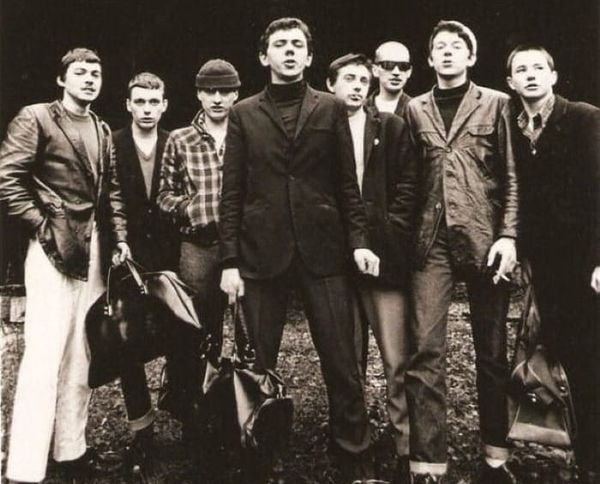
The stylistic ska affinities, the mutual worship of Prince Buster and appreciation of sharp suits actually obscured considerable differences between the Specials and Madness. If the Specials were essentially a punk band playing rocksteady, Madness had next to no interest in punk as music. Instead they had grown out of a kind of mid-70s north London artsy hooligan bohemia, one that drew inspiration from both glam and skins (they wore DM boots, but ones they spray-painted in lurid colours), 1950s Americana and pub rock, music hall and sit-coms, graffiti and comic books.
In short, if the Specials were the pop offspring of The Clash and Dandy Livingstone, Madness were the product of Prince Buster and Ian Dury. Several future Nutty Boys were regulars at Kilburn and the High Roads gigs, fascinated by the extravagant, comical theatricality and everyday lyricism. Listen to 1975’s Handsome and in the rinkydink Carribean pastiches of “The Roadette Song” and “The Call-Up” you can already hear the germ of Madness, waiting to come to fruition.
Ska was in fact a relatively late addition to the Madness repertoire. They started out almost as a Highgate youth club band, driven by the focus and ambition of pianist Mike Barson and Lee Thompson’s love of 1950s yakkety-sax (as well as the unhinged musicianship of Andy Mackay in Roxy and the Kilburns’ Davey Payne), playing a rum mix of rock and roll and reggae - their first 1977 house-party setlist included “Just My Imagination”, Clyde McPhatter’s “Lover Please, Stevie Wonder’s “For Once In My Life” and Carole King’s “It’s Too Late”, as well as the The Cats’ “Swan Lake” and “The Roadette Song”. Later sets would include Ted-friendly rock and roll standards like “Tequila”, “Poison Ivy” and “See You Later Alligator”.
It wasn’t until the start 1979, as the pub rock began to fade away and a new wave of skins and mods went out searching for upbeat dance music, that ska began to predominate in the Madness setlist. In fact it may have been the arrival of the Specials, supporting the Clash and getting adoring coverage in the NME, that led to Madness seeing the potential in hitching a ride on the ska bandwagon.
This wasn’t purely pop opportunism: almost all of the band had grown up on Motown and reggae, and between them they had amassed an enviable Blue Beat collection which they shared with the jukebox in Hope and Anchor pub in Islington, the epicentre of their nascent north London scene. But there was certainly a shrewd eye for the pop moment, as welll as a desire to not be entirely defined it.
By June they had formed a mutual appreciation society with the Specials and passed a demo of ‘The Prince’ to Dammers (composed by Thompson by collating the tracklisting from the Fabulous Greatest Hits of Prince Buster compilation and pinching the solo from “Texas Hold Up”, you could hardly imagine a track more likely to endear them to him). By August it was released, backed with a cover of Prince Buster tune from which they took their name, as the second single on 2-Tone. By September it entered the charts, and by the beginning of October it had climbed into the top 20, and got them their first Top of the Pops appearance. This was the punk DIY dream made real: from the clubs to the charts in a matter of weeks.
“Once critic called us a rude-boy ska band, but we really don’t want to be categorised like that,” Foreman told the NME as early as August 1979. The decision to sign their long-term deal with the venerable Stiff, rather than the more fashionable 2-Tone now looks remarkably far-sighted for an unwieldy seven-piece largely consisting of teenagers and careering ahead at breackneck speed without any real management. While its possible they might have flourished at 2-Tone, and possibly even bankrolled the whole operation had they stayed, you could easily have seen them caught up in the label’s in-fighting or pressured to become a kind of Bad Manners-style novelty act.
Instead Stiff, run in a maverick fashion by pub rock impressario Dave Robinson gave them the space to develop as English eccentrics, very much in the tradition of Ian Dury. Though ironically it was Robinson who ensured they milked the 2-Tone moment for all it was worth - insisting, despite the band’s reluctance, that the nutty Prince Buster cover “One Step Beyond” was their debut single (he got producers Clive Langer and Alan Winstanley to loop the original desultory recording until it was a reasonable single length) and then persuading them to release the even more wacky “Nightboat to Cairo” as a third single from the album. But it was Robinson who had also spotted the songwriting potential of Mike Barson.
If there was one song that saw Madness transcend the moment it was “My Girl”. As an album One Step Beyond… for the most part, could not have been more of its time. The monochrome nutty train cover, the new shamelessly derivative Madness logo, the inner sleeve polaroids of fans, were all 2-Tone on-brand, while the running order caught the rude-boy knockabout joy of the Madness live experience, from ska covers to the Kinksy character sketches (“In the Middle of the Night”, “Bed and Breakfast Man”) to the call and response tomfoolery of “Chipmunks are Go”.
But “My Girl” stood out on the album, and in its time, for its touchingly awkward tenderness. Within 2-Tone the Specials always cast a baleful eye on the myths of romance, while Dexys were positively puritanical. More widely punks and post-punks from Buzzcocks to Elvis Costello to Gang of Four had all coolly anatomised love’s discourse. More than the clothes, the wideboy patter, or the dance moves, this was Madness’s great inheritance from Ian Dury: by virtue of sheer charm, melodic genius, loving details and happysad wit, they were able to compose heartfelt, affecting songs about the simplest subjects. A row about watching telly; teenage pregnancy; buying condoms for the first time; memories of school playgrounds and childhood homes.
It’s hard to think of any band since the Beatles who could take such commonplace, complex feelings and phenomena and transmute them into such magnificent chart-topping pop. Suggs is fond of referring to their early ska days and their Dublin Castle residency as their version of the Beatle’s Hamburg, the raw roots from which they emerged in the wider culture, and to be honest, Madness’ pop career over the next three or four years, covering some 16 top ten singles, has few other peers.
The ska element in their music never really disappeared, but became more thoroughly absorbed into a uniquely north London stew of Max Wall and Motown, Stax and Steptoe & Son, Leo Baxendale and the Lavender Hill Mob, Ray Davies and Minder. You can trace the rude boy vigour of One Step Beyond through the subsequent albums: on Absolutely, “Embarrassment” has a brass section worthy of Dexys and tackles teen pregnancy and interracial relationships with much more sympathy than the Specials’ “Too Much Too Young”. Meanwhile, on 7, “Grey Day” (“The rain is falling on my face / I wish I could sink without a trace”) anticipates the dolour of “Ghost Town”.
But by their annus miribalis of 1982, with their first greatest hits collection, trailed by “House of Fun”, and then The Rise and Fall, preceded by “Our House”, they were sui generis, not so much 2 Tone as an overcast London rainbow, spanning the full spectrum of English tragi-comedy.
Meanwhile 2-Tone itself was finally coming off the rails, with the departure of Terry, Lynval and Neville from the Specials to set up Fun Boy Three, and Dexys were having a second or third coming as celtic soul rebels in dungarees and neckerchiefs, a long way from their donkey jackets and bobble hats. Such was the speed of British pop in the early 80s that just a year or two after the highwater mark of “Ghost Town”, in the polychrome era of MTV, 2-Tone already felt as much an anachronism as black and white tv.
Thanks to their visual wit, slapstick cheek and uncanny understanding of how to craft pop videos that remain endlessly watchable, Madness were able to make the transition while their peers stumbled. But as they moved further from their live roots in the nutty, sweaty squalor of the Dublin Castle or the Hope and Anchor, a melancholy seemed to overtake them. Having achieved everything he had ever wanted, Mike Barson retired at the age of 25 to practice Buddhism in Holland. The remaining members carried on - this after all was one of the great songwriting collectives of the 80s, with pretty much every member contributing a masterpiece or two - but despite some late, great twilight singles (“Yesterday’s Men”, “One Better Day”), without much enthusiasm or purpose.
After some time out, they reconnected with that community at Madstock at Finsbury Park in 1992, the first in a series of lucrative reunions that ultimately lead to creative renaissance of 2009’s The Liberty of Norton Folgate. Such was the power of that indomitable skinhead moonstomp, the joy of the community Madness forged, that the crowd reportedly caused a 4.1 seismic disturbance on the Richter Scale in Finsbury Park. As they had prophesised way back in 1979 “An earthquake is erupting, but not in Orange Street…”